When the Lights Dim and the Night Gets Real: Tales From the Final Hour
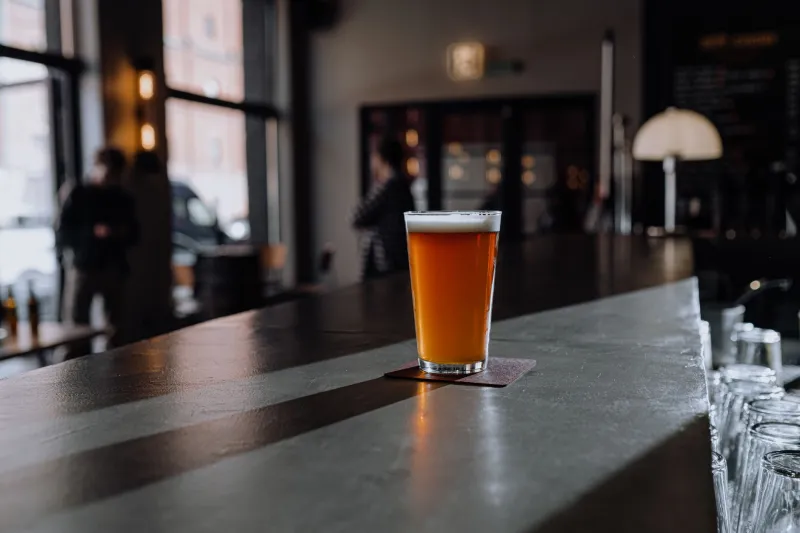
There's a specific kind of quiet that settles over McCoy's in that last stretch before closing. The crowd has thinned. The jukebox is playing something slower than it was two hours ago. Someone's nursing the bottom of a glass they're not quite ready to finish. And somewhere near the end of the bar, a conversation is happening that probably couldn't have started any earlier in the evening.
That final hour is its own thing entirely. Ask anyone who's worked behind the bar long enough, and they'll tell you the same: the best moments — the ones that stick — almost always happen right before the lights come up.
The Night Changes Its Shape
Early in the evening, a bar is all performance. People are loud, trying to be noticed, running through the social scripts that get them through a Friday. There's energy, sure, but it's surface-level stuff. As the night wears on, the audience starts to thin, and something interesting happens — people stop performing.
That's when the real conversations start.
Regulars here at McCoy's talk about it like it's almost a ritual. You come in with your crew, catch up on the week, maybe watch some of the game. But then your friends start heading out one by one, and somehow you're still there, leaning on the bar with someone you barely knew three hours ago, talking about something that actually matters to you.
It's not magic, exactly. It's just what happens when the social pressure releases and you've had just enough to be honest.
Stories the Staff Still Tell
If you want to hear the real lore of a place like this, you ask the people who close it down every night.
One bartender here — she's been at McCoy's long enough that she's practically part of the building — has a running list of last-call moments that she swears she'll write down someday. There was the couple who came in separately, sat two stools apart, argued about baseball for forty minutes, and ended up exchanging numbers right before the chairs went up. There was the guy who showed up looking like he'd had the worst week of his life, said almost nothing until 12:45, and then spent fifteen minutes telling her about his dad in a way that clearly hadn't come out before.
"That last hour is when people get honest," she'll tell you. "Not messy honest. Just... real. Like they finally stopped filtering."
Another regular, a contractor who's been coming in on Thursday nights for years, puts it a different way. "By the time last call rolls around, everybody still here made a choice to stay. There's something about that. You're not here because it's early and the options are open. You're here because this is where you want to be."
The Mythology of One More Round
There's a reason "one more" is such a loaded phrase. It's never really about the drink. It's about not being ready for the night to end — not because you're having the wildest time of your life, but because something good is happening and you're not done with it yet.
Some of the most talked-about nights at McCoy's didn't involve anything extraordinary. No big celebrations, no wild surprises. Just a handful of people who kept saying "one more" until suddenly it was last call, and nobody could quite explain where the time went. Those nights have a way of becoming the ones people reference for years.
"Remember that night we closed the place down?"
Yeah. Everybody does.
What Last Call Actually Means
In a lot of places, last call is just a logistical announcement. Here, it's more like a signal flare. It tells you the window is closing, and whatever you haven't said yet, you'd better get to it.
Some people use that urgency to wrap up loose ends — plans that were half-made all night suddenly get locked in, numbers get exchanged, tabs get settled. But others use it differently. The announcement lands and they get quieter, not louder. More reflective. Like the idea of going back out into the world is making them think about something.
That's the thing about a good pub. It's not just a place to drink. It's a place to decompress, to process, to be around people without the pressure of having an agenda. And in that last hour, when the crowd has thinned and the noise has dropped, that function becomes the most obvious it's been all night.
The Ones Who Always Stay Until the End
Every regular bar crowd has its closing-time faithful. You know who they are. They're not necessarily the biggest drinkers or the loudest talkers earlier in the evening. They're just the ones who aren't in a hurry to leave.
At McCoy's, those folks tend to be the ones with the best stories. They've seen things. They've been around for the weird nights and the quiet ones, the packed Saturdays and the slow Tuesdays when there were maybe six people in the whole place and somehow it was one of the best nights of the year.
They'll tell you that the bar feels different when it's almost empty. Warmer, somehow. More like a living room than a public space. The staff relaxes a little, the music feels more personal, and the people still there have all, in some unspoken way, agreed to be present for the final chapter of the night.
Why You'll Keep Showing Up for It
You can't plan a last-call moment. That's the whole thing. You can show up hoping for one and leave early because nothing clicked. Or you can come in on a random Wednesday with no expectations and find yourself still sitting there at 1 a.m. wondering how that happened.
What keeps people coming back to McCoy's — and to any great pub worth its salt — isn't the certainty of a good time. It's the possibility. The understanding that on any given night, in that final stretch before the lights come up, something real might happen.
A friendship that sticks. A conversation that shifts something. A story you'll be telling for years.
Last call isn't the end of the night. At McCoy's, it's usually the best part.