You Don't Have to Know What You Want to Order Something Great
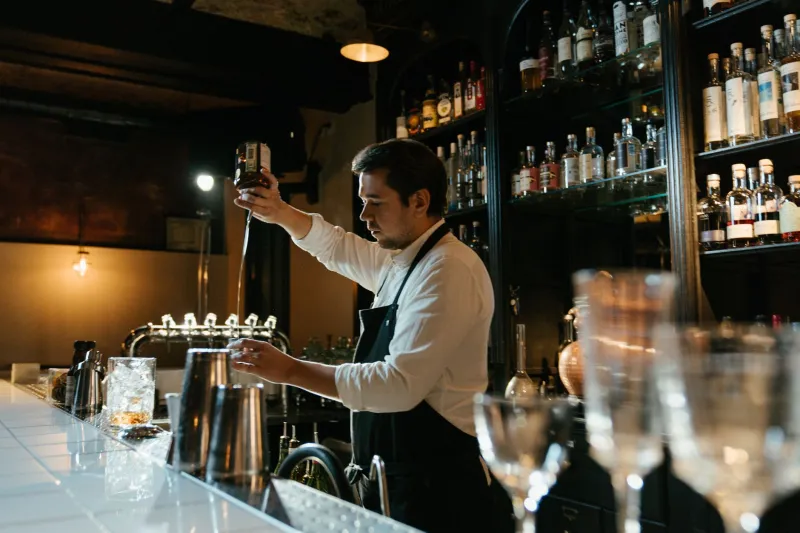
There's a specific kind of panic that sets in when the bartender slides over, makes eye contact, and waits. The drink menu suddenly looks like a foreign language. The person next to you ordered something without hesitation. You say the first thing that comes to mind — usually a beer you don't even want — and spend the next hour mildly disappointed.
It happens to everyone. And honestly? It doesn't have to.
Ordering a drink you'll actually enjoy is less about knowing every cocktail on the menu and more about knowing how to have a thirty-second conversation with the person holding the shaker. Here's how to do it without feeling like you're back in school and got called on without reading the chapter.
Admit You Don't Know — It's Genuinely Fine
The biggest mistake newcomers make at a bar is pretending they know what they want when they absolutely do not. You'll order something based on a vague memory of hearing the name before, it'll show up tasting like cough syrup mixed with regret, and you'll drink it politely while dying a little inside.
Skip that whole chapter. Just say it: "I'm not really sure what I'm in the mood for."
A good bartender — and McCoy's has them — will not judge you for this. In fact, most bartenders genuinely enjoy the puzzle of matching a person to a drink. It's one of the more satisfying parts of the job. What they don't enjoy is guessing games or someone ordering something wrong and then making a face about it.
You're not bothering them. You're giving them something interesting to do.
Lead With Flavor, Not Names
If you don't have a specific cocktail in mind, the most useful thing you can do is describe what you're after in plain English. Think about it in terms of flavor — that's the universal language at any bar.
Are you in the mood for something sweet? Tart? Bitter? Boozy and simple, or light and refreshing? Cold and crisp like something you'd want on a hot patio, or warm and rich like something that belongs next to a fireplace?
You don't need to know the difference between a daiquiri and a gimlet to answer those questions. And once you answer them, the bartender can do the rest.
Try something like: "I usually like things that aren't too sweet — kind of citrusy and a little strong." Or: "I want something that tastes like a dessert but doesn't feel like one." These are completely workable starting points. The bartender will take it from there.
Tell Them What You've Liked Before
If flavor descriptions still feel slippery, lean on your history. Think back to any drink you've genuinely enjoyed — doesn't matter if it was a margarita at a chain restaurant or a spiked lemonade at a backyard cookout — and mention it.
"I had this drink once that was kind of peachy and not super alcoholic — anything like that?" is a perfectly valid request. It gives the bartender a reference point and a direction. They might not recreate the exact drink, but they'll get you somewhere close, and close is usually pretty good.
This also works in reverse. If you know what you don't like — gin that tastes like a Christmas tree, drinks that are too sugary, anything with a weird foam on top — say that too. Ruling things out is just as helpful as naming what you want.
Don't Sleep on the Classics
If you're overwhelmed by a long cocktail menu full of house specials with clever names, there's always a reliable shortcut: the classics.
Old fashioned. Manhattan. Gin and tonic. Whiskey sour. Negroni. These drinks have been around forever because they work. Most bars can make them well, and they're a great baseline for figuring out what you like. Order one, see how you feel about it, and use that as data for next time.
At McCoy's, the bar team knows these standards cold. If you say "I want something classic and not too complicated," you're going to land somewhere good. And if the first one isn't quite right, say so — that's not rude, that's just communication.
Ask Questions Like You Mean It
Here's a small mindset shift that makes a big difference: treat ordering a drink the same way you'd treat ordering food at a restaurant you've never been to. You'd ask what the kitchen does well. You'd ask what's popular. You'd ask if the fish is fresh.
Do that at the bar. "What do you like making?" is a great question. So is "What's something people always come back for?" or "Is there anything on the menu that's kind of unexpected but really works?"
Bartenders have opinions. Strong ones. And when you invite those opinions, you often end up with something better than anything you would have picked on your own. That's how people discover their new regular order — not by already knowing everything, but by asking the right person.
Finding Your "Regular"
There's something quietly satisfying about becoming someone with a usual. Walking into a place and having the bartender already reaching for your glass before you've said a word — that's a small, specific kind of belonging that doesn't cost much but means a lot.
But nobody starts out with a regular. It takes a few visits, a little trial and error, and the willingness to say "that was great, what was in it?" when something lands right. Over time, you build a mental map of what you like and where to find it.
McCoy's is a good place to do that kind of exploring. The menu has range, the staff pays attention, and the atmosphere is exactly the kind of low-pressure environment where you can try something new without it being a whole thing. Nobody's watching. Nobody's grading you. They just want you to have a good drink.
The Only Rule That Actually Matters
There's no wrong way to order a drink as long as you end up with something you enjoy. The bar is not a test. The cocktail menu is not a pop quiz. The bartender is not your professor.
Show up, be honest about what you're after, ask a question or two, and let the process work. You might nail it on the first try. You might need a second attempt. Either way, you'll be sitting there with a drink in your hand and a story to tell — and that's pretty much the whole point.
Next round's on you to pick something new. We'll be here.