More Than a Bar: How Your Local Pub Holds the Neighborhood Together
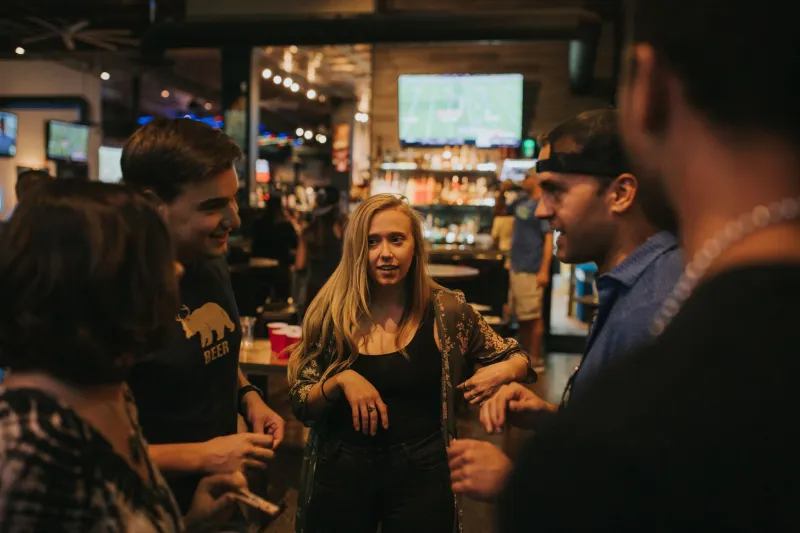
Somewhere between the second pint and the basket of fries going cold on the table, something happens that you can't really plan for. A conversation starts. Maybe it's two people who live three blocks apart and have never actually spoken. Maybe it's a longtime regular and a newcomer who just moved in last month. Whatever the combination, the result is the same: the neighborhood gets a little smaller, a little warmer, and a little more like the kind of place people actually want to live.
That's what a real local pub does. And it's happening at McCoy's more often than most people realize.
The Invisible Infrastructure
City planners talk a lot about infrastructure — roads, transit, broadband, parks. What they talk about less is the social kind. The places where people accidentally run into each other, where word travels fast, where you find out your neighbor's kid just made the travel baseball team or that the corner lot is finally getting developed. That kind of informal communication network is harder to build than a bike lane, and it can't be funded by a municipal bond.
Pubs like McCoy's fill that gap without anyone making a formal decision that they should. It just happens. You come in for a burger on a Wednesday, you end up at the bar next to someone who's been in the neighborhood since before the old hardware store closed, and suddenly you know more about where you live than you did an hour ago.
That's not an accident. It's what happens when a space is designed — consciously or not — to make people feel comfortable enough to actually talk.
A Place Where New Faces Become Familiar Ones
Every neighborhood has a churn. People move in, people move out. The faces change faster than the street signs do. For a new resident, figuring out where you actually belong in a place can take months. You can live somewhere for a year and still feel like an outsider if you haven't found your footing.
For a lot of people, McCoy's has been that footing.
There's something about a pub environment that lowers the social stakes in a way that, say, a neighborhood association meeting just doesn't. Nobody's taking minutes. Nobody's waiting their turn to speak. You're just sitting somewhere comfortable, and the conversation finds you. New residents who wander in on a Friday night often leave knowing more people than they expected — and they come back the following week because of it.
Long-timers appreciate it too. Having a place that keeps absorbing new people into the fabric of the regular crowd is part of what keeps a neighborhood from feeling like it's drifting apart.
Where Local Issues Actually Get Aired
It would be overstating things to call McCoy's a town hall. But it's not entirely wrong either.
When something's happening in the neighborhood — a school rezoning, a new development proposal, a pothole that's been there for six months, a local business shutting down — people talk about it here. Not in any organized way. Not with a facilitator or a PowerPoint presentation. Just in the way that people talk when they're comfortable and among familiar faces.
That kind of informal conversation matters more than it gets credit for. It's where opinions form, where people figure out they're not alone in thinking something, and where sometimes — not always, but sometimes — someone says "we should actually do something about that" and means it.
A few years back, a group of regulars got talking at McCoy's about a stretch of road near a local school that had been a safety concern for years. That conversation didn't end at the bar. It turned into a petition, a few meetings with city council, and eventually, a crosswalk. Nobody's going to put up a plaque. But the people who were there that night know how it started.
Celebrating What Doesn't Make the News
The big wins in any neighborhood rarely make headlines. A kid gets into their first-choice college. A local business hits its tenth anniversary. Someone retires after thirty-five years on the job. These are the moments that matter deeply to the people involved and to the community around them, but they don't show up in the paper.
They show up at McCoy's.
This is where those celebrations happen — low-key, genuine, surrounded by people who actually know the story behind the occasion. There's no venue fee, no formal invitation list, no dress code. Just a reserved table, a round of drinks, and the kind of warmth that comes from being in a room full of people who are genuinely glad for you.
It sounds simple because it is. But don't underestimate how rare it is to have a place like that.
The Long Game of Showing Up
None of this happens overnight. The community role that a pub plays is built slowly, through consistent presence and the kind of reliability that makes people trust a place. McCoy's has been that consistent presence — the spot that's open when you need it, that feels the same way it did last time, that keeps enough of its regulars around long enough for real relationships to form.
That consistency is its own kind of community service. In a world where businesses come and go and neighborhoods can feel like they're constantly starting over, a place that stays and stays the same is genuinely valuable.
People talk about the character of a neighborhood like it's some fixed thing — something a place either has or doesn't. But character is built by the spaces that hold it. The corner store that's been there forever. The park where everyone ends up on summer evenings. The pub where you know you'll see someone you recognize.
McCoy's is that pub. And if you're a regular, you already know it — even if you've never quite put it into words.
Come In and See for Yourself
If you've been meaning to stop by, or if it's been a while since your last visit, consider this your nudge. Pull up a stool, order something good, and give it a few minutes. Chances are the conversation will find you. The neighborhood has a way of showing up here — and it's usually worth sticking around for.