Pick Your Spot, Pick Your Night: What Your Seat at McCoy's Really Says About You
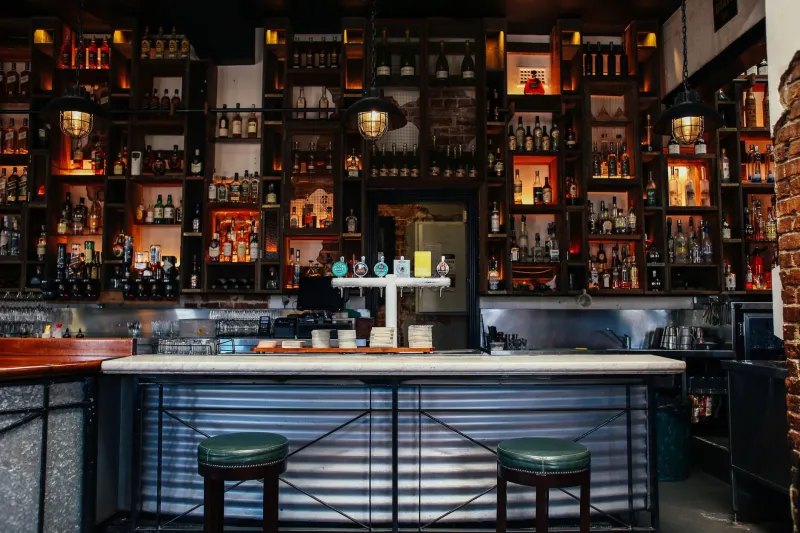
Walk into McCoy's on any given Friday and take a slow look around before you commit to a seat. You'll notice something interesting. The couple tucked into the corner booth is leaning close, voices low, entirely in their own world. The guy perched at the end of the bar is already mid-conversation with a stranger, laughing at something that happened thirty seconds after he sat down. The big rowdy group near the back has pushed two tables together and they're halfway through their second pitcher. Nobody told any of them where to go. They just knew.
That instinct is more deliberate than it looks. Where you choose to sit at a pub isn't random—it's a quiet declaration of what you came here for. And in a well-designed public house, the room itself almost makes the decision for you.
The Bar Stool: Open for Business
Sitting at the bar is an act of social optimism. You're saying, without words, that you're available. Not necessarily lonely, not necessarily looking for anything specific—just open to whatever the night decides to bring.
The bar counter is the most democratic piece of furniture in any pub. CEOs have sat next to plumbers here. First dates have happened between strangers who originally came in solo. Arguments have started and ended before the second round arrived. There's a reason people say the bar is the heart of the pub—it's the one place where the usual social rules get a little looser.
At McCoy's, the bar stools face the taps and the bottles and the bartenders who are, as we've written before, already reading you before you open your mouth. That positioning matters. You're not just sitting somewhere—you're entering a flow. The bartender becomes your anchor, and whoever ends up beside you becomes a kind of accidental neighbor. Some nights that neighbor is your new best friend. Some nights they're just a pleasant presence. Either way, you're not eating alone in your head.
Bar stools are also the right call when you're flying solo and you want to decompress without being alone alone. There's a specific kind of comfort in being surrounded by ambient human noise, nursing a cold pint, with nobody requiring anything from you but also nobody ignoring you either. The bar stool gives you that balance.
The Booth: Your Own Little Republic
Booths are a different proposition entirely. When you slide into a booth, you're drawing a soft boundary around your group—or yourself—and saying: this is our space tonight.
There's a reason booths feel more intimate. The high backs create a kind of acoustic and visual privacy that open tables don't offer. You're not cut off from the room, but you're not fully in it either. You can watch the whole place from a booth without feeling watched yourself. That's a powerful thing.
Date night almost always belongs in a booth. Not because booths are inherently romantic—though they can be—but because they give two people the room to actually focus on each other without the visual and conversational noise of a busy bar. You can linger. You can take your time over the food. You're not competing for the bartender's attention or accidentally getting pulled into someone else's conversation.
Booths also belong to the long dinners. The ones that start with appetizers and end three hours later when someone finally looks at their phone and realizes it's almost midnight. When a group of friends hasn't seen each other in months and has about a thousand things to catch up on, a booth gives them the space to do it properly. Nobody's jostling for position. Everyone has a wall or a seat back to lean against. The food comes, the drinks come, and time does that thing it does in good pubs—it slows down just enough.
The Middle Ground: High Tops and Patio Tables
Not every night fits neatly into "booth" or "bar." That's where the high tops earn their keep.
High-top tables are the social wildcards of pub seating. They're communal enough that you might end up talking to the group next to you, but defined enough that you've got your own territory. They work well for the casual work hang—the coworkers who want to debrief after a long week without it feeling too formal. They're good for the friend group that's still figuring out the vibe of the night. Are we staying for two drinks or four? Are we ordering food or just snacking? The high top doesn't force you to commit.
Outdoor patio seating, when the weather cooperates, operates on its own logic entirely. Something about being outside loosens people up. Conversations get louder. Strangers at neighboring tables make eye contact and smile. The whole thing feels a little more like a block party than a restaurant. If you're in the mood for that easy, unstructured kind of social energy, the patio is your answer.
Reading the Room Before You Sit
Regulars develop an almost unconscious ability to read a pub space before they pick their spot. They'll walk in, clock the energy of the bar, notice whether the booths are mostly full or mostly empty, feel out the general noise level, and make a call in about ten seconds. That's not luck—it's pattern recognition built over dozens of visits.
Here's a shortcut for the rest of us: ask yourself one question before you sit down. What do I actually need tonight?
If the answer is connection—with friends, with strangers, with the general energy of a good room—head for the bar. If the answer is comfort, focus, or the kind of conversation that needs room to breathe, find a booth. If you're genuinely not sure, grab a high top and let the night decide.
The Pub Was Designed for This
A great public house doesn't just fill a room with furniture. It creates zones—each one calibrated for a different human need. The fact that McCoy's can host a first date, a birthday blowout, a solo Tuesday-night pint, and a business dinner all at the same time, without any of those experiences feeling wrong, is not an accident. It's the whole point.
The booth and the bar stool are both right. They're just right for different versions of the same night out. The trick is knowing which version you showed up for—and then trusting that the room has exactly what you need.
Now go find your spot. The pint's not going to pour itself.