What Your Bartender Already Knows About You Before You Say a Word
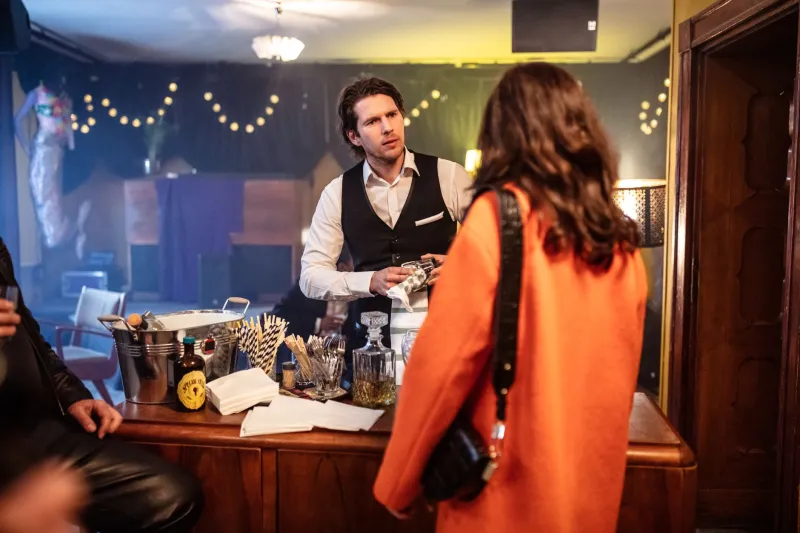
You slide onto a barstool, shrug off your jacket, and stare at the taps for a second before making eye contact. To you, it's just Tuesday night. To the bartender behind the bar, it's a paragraph worth of information.
The best ones never make it obvious. They don't hover, they don't interrogate, and they definitely don't project some scripted warmth that feels like a customer service training video. What they do — and what separates a truly great bar experience from a forgettable one — is read the room. Quietly, constantly, and with a kind of practiced precision that takes years to develop.
At McCoy's, that skill is something we take seriously. Not because it's a policy, but because the people who work behind our bar genuinely care about getting it right.
The First 30 Seconds Tell Everything
Dave, who's been behind the stick at McCoy's for going on seven years, says the moment someone sits down is the most telling of the whole visit.
"You can learn a lot before they even order," he says. "Are they scanning the room or staring straight ahead? Did they come in with their phone already out, or did they put it face-down on the bar? Those things matter. Phone face-down usually means they want to be present. Face-up and they're halfway somewhere else already."
Body language, he explains, is the first language of any bar. Shoulders turned inward, arms crossed, eyes low — that's someone who wants a drink and a little peace, not a conversation. Elbows on the bar, leaning forward, glancing around — that's someone who showed up hoping the night would surprise them.
The trick isn't acting on every signal. It's knowing which ones to trust.
Solo Diners Are a Study in Nuance
Handling a solo guest might be the highest-wire act in bartending. Get it wrong in one direction and you've ignored someone who was quietly hoping for a little human connection. Get it wrong in the other and you've smothered someone who just wanted a burger and some time to decompress.
Marissa, who splits her shifts between the bar and the floor at McCoy's, has developed what she calls a "check-in without committing" approach.
"I'll make a light comment when I drop their drink — something about the game on TV, or the special we're running — and then I just let it land," she says. "If they pick it up and run with it, great. If they give me a polite smile and go back to their phone, I've got my answer. No harm done."
The key, she says, is never forcing the moment. A solo guest who wants company will find a way to keep the thread going. One who doesn't will close it down gently, and a good bartender respects that without making it weird.
"People come in alone for a hundred different reasons," Marissa adds. "Some of them just had a rough day and need the background noise of a pub without actually talking to anyone. That's completely valid. We're here for that too."
Reading Couples and Groups Is Its Own Skill Set
Two people at a high-top table leaning toward each other, speaking quietly — that's not the moment to swing by with a joke about the game. A group of six who've been loud and laughing for two hours, glasses running low, starting to glance toward the bar? That's the moment to appear like you've been reading their minds.
Dave calls it "anticipatory service," though he laughs a little at how formal that sounds.
"It's really just paying attention," he says. "When a group hits that lull — you know the one, where the conversation dips and people start looking around — that's when another round can actually save the night. It gives everyone something to do with their hands, resets the energy. You swoop in at the right second and suddenly you're part of the reason the night went well."
With couples, the calculus is different. A first date has a completely different energy than a couple who've been married for fifteen years. First dates tend to run a little nervous and deliberate — they're building something, and the last thing they need is a bartender cracking jokes every five minutes. Regulars who come in together once a week? They usually want to be recognized, remembered, and treated like they belong there. Because they do.
The Moments That Changed Their Approach
Every bartender who's been at it long enough has a story that recalibrated how they read people.
For Dave, it was a guy who came in alone on a weeknight, ordered a beer and the fish and chips, and sat quietly at the end of the bar for about an hour. Dave left him alone, same as he would anyone sending those signals. On his way out, the man stopped and said it had been the first time he'd left the house since his wife passed away three weeks earlier. He thanked Dave for not making a big deal out of him being there.
"That one stayed with me," Dave says. "Sometimes giving someone their space is the most generous thing you can do. He didn't need conversation. He just needed to be somewhere that felt normal for a little while."
Marissa's turning point came from the opposite direction — a woman she'd left alone too long who eventually flagged her down and admitted she'd been hoping someone would just talk to her. "She wasn't upset about it, but I could tell she'd been waiting. I learned that day that not every quiet person is asking to be left alone. Some of them just don't know how to start."
The Unspoken Contract at the Bar
There's an implicit agreement between a bartender and every person who sits down in front of them. The guest brings whatever they've got going on that day — the good nights, the rough ones, the celebrations, the solo Tuesdays — and the bartender's job is to meet them exactly where they are.
No script. No formula. Just attention, instinct, and enough experience to tell the difference between someone who needs another round and someone who needs the check.
At McCoy's, that's not a technique we teach. It's something the right people bring with them and sharpen over time. You'll notice it the next time you sit down — or more likely, you won't notice it at all. Which is exactly the point.