Strangers at the Bar: How a Good Pub Turns Awkward Silences Into Lasting Friendships
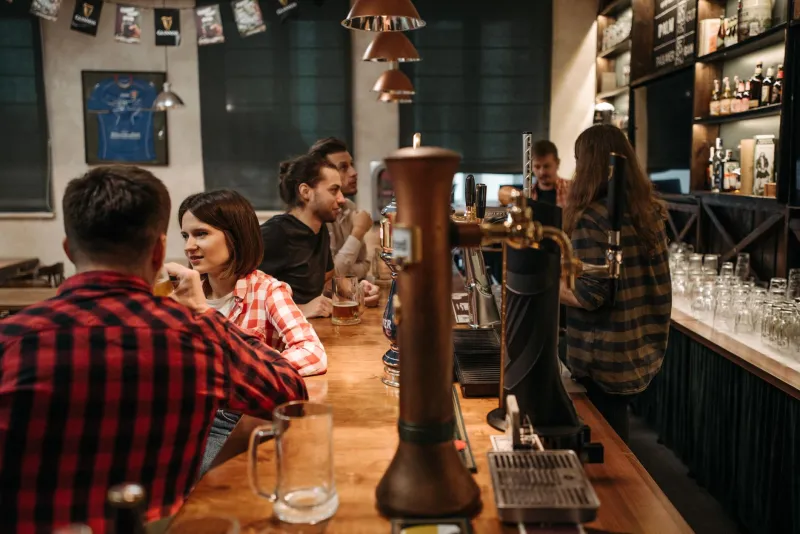
Walk into almost any other restaurant in America and you'll notice something: people keep to themselves. Eyes stay on menus. Conversations stay at the table. The invisible walls between parties are thick enough to be structural.
A pub is different. Always has been.
There's a reason people have been gathering in public houses for centuries — not just to eat and drink, but to actually connect. The bar is a shared space. The communal tables invite conversation. The whole setup is designed, whether anyone planned it that way or not, to make human contact feel less like an imposition and more like the point.
But even in the friendliest spot, making that first move can feel a little awkward. Whether you're a newcomer who doesn't know a soul or a regular who's somehow never introduced yourself to the guy who's been sitting three stools down for two years, a little social fluency goes a long way.
Why the Pub Works the Way It Does
Before getting into tactics, it helps to understand the environment. A pub operates on a kind of low-stakes social contract that most dining spaces don't have. The bar itself is the great equalizer — you're all there for the same reason, you're all waiting on the same bartender, and nobody expects you to be performing.
That shared context is your biggest asset. You don't need a clever opening line. You just need to acknowledge the situation you're both already in. That's it. The pub does half the work for you.
Add in the fact that most people who choose to sit at a bar — rather than grabbing a corner table — are at least somewhat open to interaction, and you've got a room full of low-hanging conversational fruit.
Starting the Conversation Without Making It Weird
The first rule is simple: don't overthink it. The best pub conversations start with the most mundane observations imaginable. "That burger looks incredible — is that the one with the caramelized onions?" "Is this your first time here?" "Good call on the IPA — I've been going back and forth on that one."
None of those lines are clever. That's the whole point. You're not auditioning. You're just opening a door and seeing if the other person walks through it.
Body language matters too. If someone's got headphones in, they've already answered your question. If they're scrolling their phone but glancing around the room, they're probably bored and might welcome a bit of company. A person nursing a drink and watching the game is fair game for a comment about the score. Read the room before you open your mouth.
One underrated move: let the bartender be your bridge. A good bartender knows the regulars, knows who's friendly, and can casually introduce you in a way that feels natural rather than forced. Don't underestimate that.
Joining a Group Without Crashing the Party
Breaking into a group conversation requires a slightly different approach — and a bit more patience.
The key is to earn your way in gradually rather than announcing yourself. If you're seated near a group that's laughing and carrying on, let yourself laugh along at something genuinely funny before you ever say a word directly to them. That shared moment is an organic entry point. From there, a brief comment directed at the group — not a monologue, just a line — opens the door without kicking it down.
Also, be willing to hang back. Not every group wants a new member, and that's perfectly fine. If your comment gets a polite smile and they turn back to each other, take the hint gracefully and move on. There's no shame in it. The pub has plenty of other people in it.
When a group does welcome you in, resist the urge to immediately dominate the conversation. Ask questions. Listen. Be curious about their stories before you start telling your own. People remember the person who made them feel interesting, not the one who talked the most.
The Regulars Have a Different Game
If you're a seasoned regular at your local, you've got a built-in social credibility that newcomers have to earn. Use it generously.
Introducing yourself to someone new at your usual spot costs you nothing and means a lot to them. A simple "Hey, first time here? You picked a good night" can completely change someone's experience. That's the kind of thing people remember — and it's the reason certain pubs feel like communities while others are just buildings with beer.
Regulars also set the tone for the whole room. When the people who belong to a place are warm and inclusive, newcomers feel it immediately. When they're cliquish or dismissive, everyone notices that too. Being a regular is a quiet kind of responsibility, and the best ones take it seriously without making a big deal out of it.
Knowing When to Wrap It Up
Good pub conversation has a natural rhythm, and part of social fluency is knowing when a chapter has ended. Not every exchange is meant to turn into a two-hour friendship. Some of the best pub interactions are fifteen minutes long — a great back-and-forth, a genuine laugh, and then a friendly wrap-up as one of you heads back to your table or out the door.
Don't overstay a conversation any more than you'd overstay your welcome at someone's home. When the energy starts to dip, wrap up warmly. "Great talking to you — enjoy the rest of your night." Clean, simple, no awkwardness.
And if it does turn into something longer? Even better. That's the pub doing exactly what it was built to do.
What Makes McCoy's Feel the Way It Does
People don't always have the right words for why they keep coming back to a place like McCoy's. They'll say something like "it just feels comfortable" or "I always run into someone I know." What they're describing, without quite naming it, is a room where the social barriers are low and the welcome is genuine.
That doesn't happen by accident. It happens because enough people made the small, low-risk choice to say hello to a stranger, to move over and make room, to ask someone how their night was and actually listen to the answer.
The food's great. The pints are cold. But the thing that keeps a pub alive is the people in it — and the willingness to act like you're all, at least a little bit, in it together.
So next time you're settled in at the bar with a drink in front of you and a stranger two stools down, don't overthink it. Just say something. Worst case, they smile and go back to their phone. Best case, you've just made a friend.
And honestly? In a pub, that second option happens more than you'd think.