Gone for Years, Back by Tonight: What Pulls People Home to Their Favorite Pub
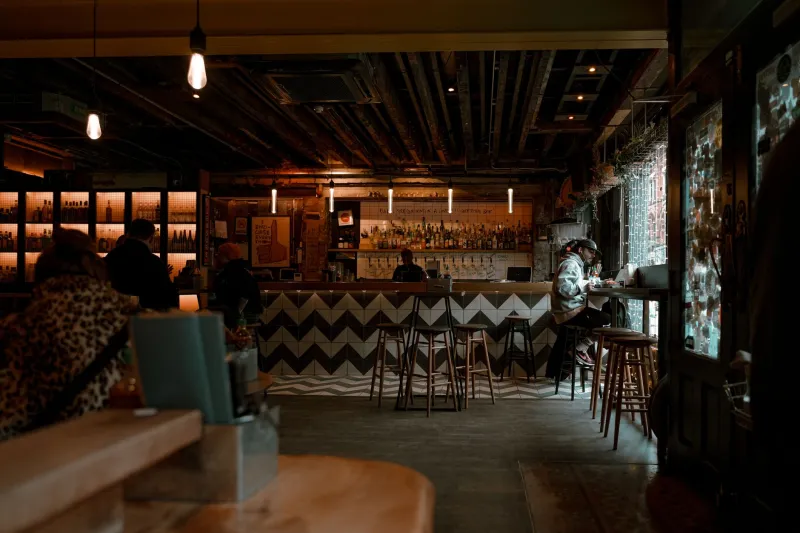
Somewhere between the second beer and the third, a regular will lean back in their barstool and say something like, "I don't know why I ever stopped coming here." And nobody at the bar will find that strange. They'll just nod. Because they've all said it themselves.
There's something quietly remarkable about the kind of loyalty a great pub earns — not the loud, branded kind, not the loyalty-points-on-an-app kind, but the deep-seated, almost involuntary pull that drags people back through a familiar door after months in a new city, years raising kids, or a whole chapter of life that somehow didn't include a Tuesday night pint. It happens constantly. And it says everything about what a real public house actually is.
The Pub as a Fixed Point
Life in the US moves fast. People relocate for jobs, drift between neighborhoods, switch routines with the seasons. Friendships get reshuffled. Apartments change. The coffee shop you loved gets turned into a smoothie bar. Most of the places that felt permanent quietly disappear or transform beyond recognition.
A good pub doesn't do that. It stays. And that consistency — the same worn-in barstools, the same smell of something good coming out of the kitchen, the same way the afternoon light hits the back corner booth — becomes something close to a landmark. Not just in the physical sense, but in the personal one.
Psychologists talk about "anchor points" — places, routines, or relationships that give people a sense of continuity during periods of change. A pub that does its job right becomes exactly that. It's the place where your life before and your life after can briefly coexist. You walk in having changed completely and somehow still feel like yourself.
The Expectation That Everything Will Be the Same
Here's the funny thing about the long-absent regular: they always expect the place to have waited for them. They walk back in after two years abroad or a cross-country stint and immediately scan the room for reassurance — Is the burger still on the menu? Does Tony still work Thursdays? Is that same neon sign still crooked above the tap?
On the surface, it sounds a little self-centered. But it's really not. What they're looking for isn't stasis for its own sake. They're checking whether the place still has its soul. Whether the thing that made it worth missing is still intact.
At McCoy's, we take that seriously. The menu evolves — it has to — but the feeling doesn't. The pints are still cold. The kitchen is still turning out food that actually satisfies. The bar still has room for a conversation you didn't plan on having. That's not an accident. It's the whole point.
Why Life Transitions Send People Back to the Bar
Pay attention to when people show back up, and you'll notice a pattern. It's rarely random. Someone comes in the week after a big move, needing something familiar. Another person reappears right after a breakup, or a job change, or a kid leaving for college. A group of old friends books a table for the first time in three years because someone's back in town and they need neutral ground — somewhere that belongs to all of them equally.
The pub becomes a kind of emotional reset button. Not an escape exactly, but a recalibration. A place to sit with whatever's going on and let the noise of a room full of other people doing the same thing remind you that transitions are just part of it.
There's real comfort in ordering the same thing you always ordered. In having the bartender remember how you take your drink. In the fact that the booth in the corner is still the booth in the corner. None of that is trivial. It's grounding in the most practical sense of the word.
The Relationship Between Place and Memory
Pubs collect memories the way other places just can't. Part of it is the time spent — you linger at a bar in a way you don't linger at a restaurant. Part of it is the loosening effect of a good drink and a comfortable room. Conversations go places they wouldn't go elsewhere. Things get said, laughed about, worked through.
So when someone walks back into McCoy's after a long absence, they're not just returning to a building. They're walking back into a whole archive of their own life. The booth where they celebrated a promotion. The bar where they met someone who became important. The table where a hard conversation finally got had.
That's a lot to carry in a room. And it's exactly why people come back for it.
What It Means to Be That Kind of Place
Not every bar earns this kind of return business. Plenty of places are fine — good drinks, decent food, nothing wrong with them. But fine doesn't pull people back across the country for a visit. Fine doesn't make someone text an old friend and say "We need to go back to McCoy's when you're in town."
What does earn that is harder to manufacture and easier to lose than most places realize. It's the combination of consistency and warmth, of a kitchen that gives a damn and a front-of-house that remembers faces. It's a space that manages to feel both lived-in and welcoming — like it belongs to the neighborhood and to everyone in it at the same time.
McCoy's has always tried to be that kind of place. The kind where you don't need a reason to come in, but if you've been away for a while, you don't need to explain yourself either. You just sit down, order a pint, and pick up right where you left off.
The Door's Always Open
If you're reading this and thinking about the last time you came in — or the last time you meant to — consider this your nudge. Life gets long and full and complicated, and sometimes the places that matter most get pushed to the back of the line.
But the barstools are still here. The kitchen's still running. And whoever's behind the bar tonight will pour you a proper pint without making a big deal about how long it's been.
That's the thing about a good pub. It doesn't hold a grudge. It just holds your spot.