Pennies, Dollars, and Everything In Between: The Real Conversation Happening When You Tip
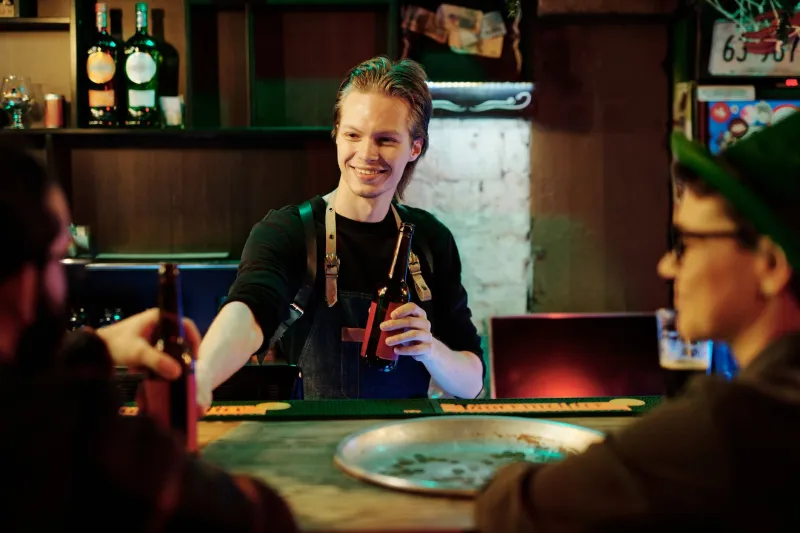
You slide a card across the bar, punch in a number on a little screen, and flip it back around. Or maybe you peel a few bills from your wallet and lay them flat beside your glass. Either way, you've just said something — and your bartender heard every word.
Tipping culture in the United States is one of those deeply embedded social rituals that almost nobody wants to talk about directly. It's awkward, it's loaded, and somehow it manages to be both deeply personal and totally transactional at the same time. But spend enough time on either side of the bar, and you start to realize that the way people tip — how much, how often, in what form — communicates volumes about who they are, how they were raised, and how much they actually understand about the world they're walking into.
What the Numbers Actually Mean
Let's start with the basics, because the baseline has shifted. For a long time, 15% was considered a solid tip. Then 18% became the new floor. Now, thanks in large part to the tablet-based tipping prompts that default to 20%, 22%, or even 25%, the expectations have crept upward again — and the gap between what customers think is generous and what bartenders consider fair has never been wider.
At a place like McCoy's, where the whole point is that you feel comfortable, not judged, the tipping math tends to be more forgiving. But that doesn't mean it goes unnoticed. A $1 tip on a $14 cocktail tells a story. So does a $5 on a $6 beer. Neither story is necessarily about wealth — it's more about attention. Are you paying attention to the person who just made your night a little better?
Most experienced bartenders aren't doing the percentage math in their heads after every transaction. They're reading the overall pattern of a customer — how they interact, whether they make eye contact, whether they say thank you — and the tip is just the final punctuation on that sentence.
Cash vs. Card: It's Not Just Logistics
Here's something that doesn't get talked about enough: cash tips hit differently, and not just financially. When you leave cash, your bartender gets it immediately. There's no waiting for a pay period, no wondering if the card processor is going to hold it, no sharing arrangement that might redirect part of it elsewhere. Cash is direct. Cash says I see you specifically.
Card tips, on the other hand, are increasingly the norm — especially among younger crowds — and bartenders understand that. Nobody's going to hold it against you for tipping on a card. But if you're a regular, if you come in every Thursday, if your bartender remembers your order before you open your mouth? A few bucks in cash every now and then is the kind of gesture that turns a transaction into a relationship.
There's also the tip line psychology to consider. Tablet screens that prompt you to tip before you've even tasted your drink — or worse, while the bartender is standing right there watching — create a weird social pressure that a lot of customers resent. That resentment sometimes comes out as a lower tip or a pointed zero, which ends up penalizing the bartender for a system they didn't design. It's one of the messier corners of modern bar culture, and there's no clean answer to it.
Regional Tipping Culture Is a Real Thing
If you've ever traveled and felt like the tipping customs were slightly off from what you were used to, you weren't imagining it. Tipping norms in the US vary more than people realize. In major coastal cities, 20% is practically the starting point and anything under that reads as a mild insult. In parts of the Midwest and South, 15% to 18% is still considered perfectly respectful, and over-tipping can sometimes feel performative rather than genuine.
What doesn't change much, region to region, is the appreciation for consistency. A regular who always leaves a decent, predictable tip is more valued — and better served — than someone who swings between extravagant and stingy depending on their mood. Bartenders have long memories, and they're serving dozens of people a night. The ones who make the job feel worthwhile tend to get a little extra care without even asking for it.
The Awkward Moments Nobody Talks About
Some tipping situations are genuinely uncomfortable, and pretending otherwise doesn't help anyone. What do you do when you're with a group and someone else is handling the tab but their tip math is embarrassing? What about when you've had a mediocre experience — slow service, a drink that wasn't quite right — but you know it wasn't really the bartender's fault? What about when you've already tipped on a card and then realize you have cash in your pocket?
There are no perfect answers, but a few guiding principles tend to hold up. First, if someone else's tip is going to stiff a bartender who served you well, it's worth quietly adding a few dollars on your own. You don't have to make a thing of it. Second, bad service rooted in a bad night or a slammed bar is different from bad service rooted in indifference — and most experienced drinkers can tell the difference. Third, double-tipping — card tip plus a little cash on the bar — is never going to offend anyone.
The awkward moments usually come from overthinking it. The goal isn't to calculate the perfect number. The goal is to acknowledge that someone spent their evening making yours better.
What Bartenders Actually Think About the Whole System
Most bartenders will tell you, if you ask them honestly, that they have a complicated relationship with the tipping system. They rely on it, they've built their financial lives around it, and they're also aware that it puts them in a position of dependence that can feel uncomfortable. The American tipping model was built on the premise that service workers would earn their wages through customer generosity rather than employer compensation — a model that benefits the employer considerably more than it benefits anyone else.
But within that system, the individual tip still matters. Not because a good bartender is going to sulk over a bad one, but because the accumulation of acknowledgment — or the lack of it — shapes how a person feels about their work night after night. The best bartenders aren't in it for the tips alone. They're in it because they genuinely like people, like the energy of a good bar, like being the reason someone's Wednesday felt like a Friday. The tip is just the part where you confirm that you noticed.
Keeping It Simple at McCoy's
At the end of the night, tipping doesn't have to be a source of anxiety. Come in, enjoy your pint, eat something good, and treat the person behind the bar like the professional they are. Tip somewhere in the 18% to 20% range as your baseline, tip more when someone goes above and beyond, and don't agonize over the exact number.
The unspoken language of tipping isn't really about dollars and cents. It's about respect — and that part, at least, is pretty easy to get right.