That First Bite Back: The Strange, Wonderful Power of Returning to a Dish You've Missed
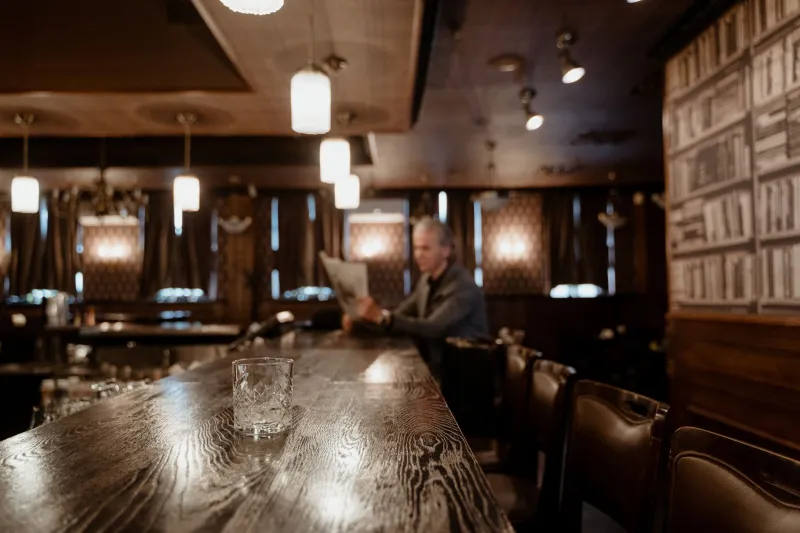
Somewhere between the front door and the barstool, it happens. You haven't been here in three years—maybe five—and yet your mouth is already forming the words before you've even looked at the menu. The burger. The one with the caramelized onions. Do you still have it?
And when the answer is yes, something in your chest loosens.
Food memory is a funny thing. Scientists have studied it for decades, tracing the way scent and taste bypass the rational brain and land directly in the emotional center—the part that stores your grandmother's kitchen, your first apartment, the bar where you met your best friend. A dish you loved five years ago isn't just a dish anymore. It's a timestamp. A portal. And coming back to it, especially at a place like McCoy's, is less like ordering dinner and more like picking up a conversation mid-sentence.
The Dish That Waited for You
Regular patron Dave Kowalski, who's been coming to McCoy's off and on for nearly a decade, puts it plainly. "I moved away for work—Pittsburgh, then Denver, then back again. Every time I came home, the first thing I did was come in and get the fish and chips. It wasn't even about being hungry. It was about checking in. Like, okay, this is still here. I'm still me."
That sentiment comes up over and over when you talk to people who've been away—whether for months or years. The returning order isn't always the fanciest item on the menu. It's rarely even the thing they'd call their all-time favorite food. It's the thing that belongs to a specific version of their life, and ordering it again is a way of reaching back and touching that version.
McCoy's kitchen manager, Rosa Delgado, has watched this play out more times than she can count. "You can tell when someone's ordering something for the first time versus when they're coming back to something," she says. "There's a different kind of focus. They're not really reading the menu—they already know. And when it comes out, they get quiet for a second. Just a second. Then they relax."
Why It Always Tastes Better Than You Remember
Here's the thing that surprises people: it usually does taste better. Not because the recipe changed—often it hasn't—but because you have. The years you spent away from a dish don't erase it from your memory; they sand it down into something almost mythological. You remember the good parts in high definition and let the rest blur.
Then you take that first bite and your brain does something remarkable. It compares the real thing to the memory, finds enough overlap to confirm what it hoped was true, and floods your system with a kind of relief that masquerades as joy. Psychologists call this "hedonic contrast"—the gap between expectation and experience, when the experience lands on the right side of the gap.
But there's more to it than brain chemistry. A dish tastes different after years away because you're bringing more to the table—literally. Every experience you've had since your last visit sits somewhere in the background, giving the familiar flavors new context. The burger you ate at twenty-three tastes different at thirty-one because you're a different person eating it. And somehow, that makes it better.
The Kitchen Keeps the Faith
For the staff at McCoy's, there's a quiet responsibility that comes with serving comeback orders. When someone walks in after years away and asks for the thing they've been thinking about, the kitchen isn't just making food—they're honoring a memory.
"We don't take that lightly," Rosa says. "If someone's been telling themselves for three years that they can't wait to come back and have our shepherd's pie, we want to make sure it's exactly right. That's not pressure in a bad way. It's more like... respect."
The menu at McCoy's has evolved over the years—new items come in, seasonal specials rotate, the occasional experiment makes it onto the board. But certain dishes stay put. Not because the team is afraid to change, but because they understand what those dishes mean to the people who keep coming back for them. Some things earn their permanence.
When the Order Carries Weight
Not every comeback order is purely joyful. Sometimes people return to a dish because someone they loved used to order it. A father who always got the Reuben. A college roommate who swore by the wings. Grief is strange and food is one of the stranger places it shows up.
Longtime McCoy's regular Carla Simmons lost her husband two years ago. He'd been a fixture at the bar for years before his health made it hard to get out. "He always got the same thing—the loaded potato skins, extra sour cream, and a Guinness," she says. "I came in a few months after he passed and ordered it. I don't even love potato skins that much." She pauses. "But I needed to sit with it for a minute. The bartender didn't say anything, just brought it out. I think she understood."
That's the thing about a pub that's been part of a neighborhood long enough. The staff learns to read the room. They know when someone needs a joke and when they need silence. When they need a fresh pint and when they need to sit with a memory for a little while.
Your Table Will Always Be Here
There's a version of comfort food that gets talked about in terms of ingredients—butter, salt, slow-cooked meat, crispy edges. And yes, all of that matters. But the deeper comfort in a comeback order is the confirmation that some things hold. That the world shifts and jobs change and people move and years pile up, and still—the burger is there. The fish and chips are there. The table by the window is there.
McCoy's has always been a place built on that kind of continuity. Good food, cold pints, familiar faces—and the understanding that some meals are about more than eating. They're about returning. They're about finding something where you left it and feeling, just for a moment, like no time passed at all.
So if you've been away—from this bar, from a dish you used to love, from the version of yourself that used to sit here on a Friday night—come back. Order the thing. Let it be exactly what you remembered, or better than you remembered, or different in ways that make sense now.
Either way, it's yours. It was always yours.
And we kept it warm.