Built to Last: The Enduring Magic of Classic Pub Comfort Food
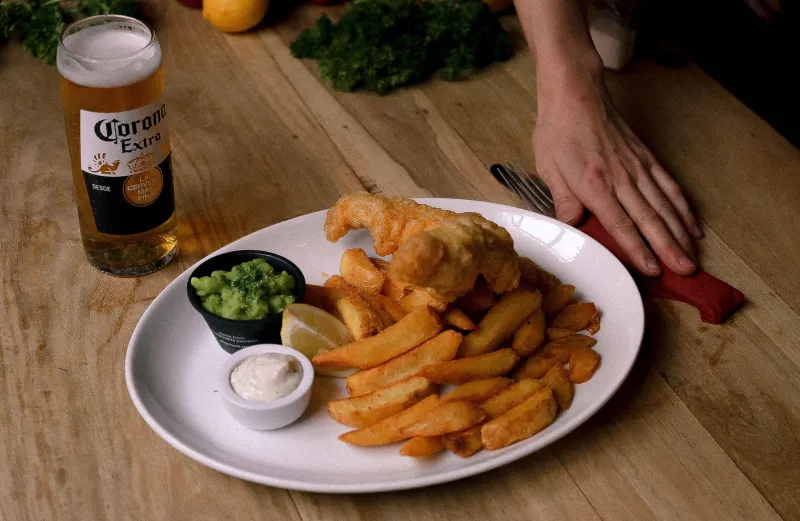
Every few years, the food world decides it's time to move on. Farm-to-table replaces diner classics. Korean BBQ tacos edge out nachos. Craft ramen starts showing up where chicken wings used to reign. And yet — walk into any good pub on a Friday night, and what do you see on basically every table? Wings. Nachos. Fish and chips. A basket of fries with something golden and crispy at the center of it all.
These dishes don't survive by accident. They survive because they understand something about people that trend-chasing menus often forget.
The Food That Refuses to Be Replaced
Talk to anyone who's worked a pub kitchen for more than a few years, and they'll tell you the same thing: the classics are the hardest dishes to execute well, and the easiest to take for granted.
"People think wings are simple," says Marcus, one of the line cooks who's been at McCoy's for going on six years. "But getting that skin crispy without drying out the meat, balancing the sauce so it's not just heat for heat's sake — there's real technique in there. We take it seriously because our regulars take it seriously."
That seriousness is earned. Chicken wings in the United States have a documented origin story rooted in Buffalo, New York, in the 1960s — a happy accident at the Anchor Bar that turned a cheap cut into a cultural institution. Today, Americans consume roughly 1.4 billion wings on Super Bowl weekend alone. That's not a trend. That's a tradition.
Nachos have a similarly scrappy origin — invented in 1943 by a maître d' named Ignacio "Nacho" Anaya in a border town in Mexico when a group of US military wives showed up after the kitchen had technically closed. He grabbed what he had: tortilla chips, cheese, jalapeños. The rest is bar-menu history.
Fish and chips, the oldest of the bunch, trace back to working-class Britain in the 1860s, arriving in American port cities with immigrant communities and never really leaving. There's something almost stubborn about its staying power — battered white fish and fried potatoes, unchanged in its bones for over 150 years.
Why Your Brain Keeps Coming Back
Dr. Linda Hargrove, a food anthropologist who studies eating behavior and cultural memory, has a theory about why these particular dishes stick around when so many others fade.
"Comfort food isn't just about taste," she explains. "It's about context. These dishes are almost always associated with social eating — sharing, gathering, the presence of other people. Your brain doesn't just remember the flavor. It remembers the experience around the food. That's an incredibly powerful anchor."
In other words, the reason nachos feel so right at a pub isn't just that they're salty and cheesy and satisfying (though they are all of those things). It's that you've eaten nachos during playoff games, on first dates that went well, during late nights with old friends. The dish carries the memory. Order it again and you're not just eating — you're accessing something.
This is also why these foods resist reinvention in their core form. You can absolutely offer truffle-parmesan fries or a Nashville hot variation on your wing menu, and people will order those. But the original version — the baseline — has to be there. Remove it, and something feels off in a way that's hard to articulate but immediately felt.
The Pub as Keeper of the Menu
There's an argument to be made that the American pub is one of the last reliable guardians of this kind of food. Fast casual chains cycle through limited-time offerings. Fine dining chases seasons and concepts. But a good public house — the kind with regulars who have a usual spot and a usual order — operates on a different clock.
"Our menu evolves, sure," says the kitchen manager at McCoy's, who's been tinkering with recipes here for years. "But the anchors don't change. The wings stay. The fish and chips stay. Because if someone's been coming in every Thursday for three years and that dish disappears, we've broken something real. That's not just a menu item to them. It's part of why they show up."
This is the quiet contract between a pub and its community. You provide the space, the cold pint, and the food that feels like home. They keep coming back and bringing people with them.
What Makes a Classic Dish Actually Work
Strip away the nostalgia for a second and look at what these dishes have in common from a pure food science standpoint, and it's almost elegant.
They're built around contrast. Crispy skin against juicy meat. Cool sour cream against spicy jalapeño. Flaky battered fish against soft potato interior. They're designed — even if not consciously — to keep your palate engaged bite after bite without exhausting it.
They're also deeply shareable. A plate of nachos is almost impossible to eat alone without it feeling slightly sad. Wings come in multiples by design. Fish and chips, with their generous portions, practically beg to be split. These are social foods engineered — again, often without intention — for the pub environment.
And they're forgiving of the moment. You can eat wings at halftime, during a lull in conversation, while watching someone shoot pool, or while catching up with someone you haven't seen in months. The food doesn't demand your full attention. It fits around the gathering rather than becoming the gathering.
Some Things Don't Need to Be Fixed
There's a temptation in the food world to treat longevity as stagnation. If a dish has been around for decades, surely it needs updating, right? A new technique, a modern twist, something to signal that it's evolved.
But sometimes the opposite is true. Sometimes a dish has been around for decades because it figured something out early and got it right. The nachos at a good pub don't need deconstructing. The wings don't need foam or a microgreen garnish. The fish and chips don't need a name-dropped provenance story.
They need to be made well, served hot, and placed in front of people who are glad to be somewhere comfortable.
At McCoy's, that's the whole philosophy in a basket. The classics are here because they work — because they've always worked — and because the people who come through the door deserve food that feels like it belongs.
Some things come back around because they were never really gone to begin with.