Patty Perfection: The Obsessive Craft Behind Every Burger at McCoy's
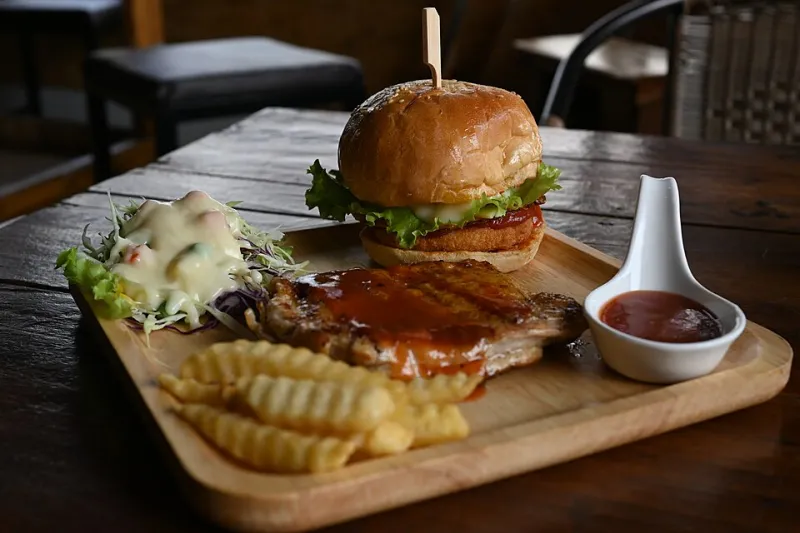
Photo: Pattaya Patrol, CC BY-SA 4.0, via Wikimedia Commons
There's a moment — you probably know it — when a burger arrives at your table and everything just looks right. The bun has that golden, slightly glossy sheen. The patty is stacked just high enough to be impressive without being structurally absurd. A thin ribbon of steam drifts up, carrying the kind of smell that makes the table next to you immediately regret their order.
That moment doesn't happen by accident. At McCoy's Public House, it's the result of deliberate choices made long before the griddle ever gets hot.
It Starts Way Before the Kitchen
Ask anyone on the McCoy's kitchen crew what makes their burger different, and they'll start talking about beef before you can even finish the question. "People think a burger is just a burger," says one of our line cooks, who's been behind the flat-top for going on six years. "But the second you start paying attention to where the meat comes from, everything changes."
McCoy's sources its ground beef from a regional supplier that prioritizes quality cuts and a fat ratio that actually makes sense for a pub-style patty. The magic number? Somewhere around 80/20 — that's 80 percent lean meat to 20 percent fat. It sounds simple, but that ratio is the difference between a juicy, flavorful bite and a dry hockey puck that no amount of condiments can save.
The beef isn't pre-formed days in advance and stacked in a walk-in somewhere. Patties get pressed fresh, which means the texture stays loose enough to develop a proper crust on the outside while staying tender all the way through.
The Science of the Sear
Here's where things get a little nerdy, and honestly, that's fine — because this part matters.
When a beef patty hits a properly preheated surface, something called the Maillard reaction kicks in. It's the same chemical process responsible for the crust on a good steak or the color on a well-toasted piece of bread. Proteins and sugars break down and recombine into hundreds of new flavor compounds. The result is that deep, savory, slightly caramelized exterior that makes a great burger taste like more than the sum of its parts.
To get there, the cooking surface has to be genuinely hot — not warm, not medium, but ripping hot. "A lot of places are scared of the heat," our kitchen lead admits with a grin. "They're worried about burning something. But if you're not hearing that sizzle the second the patty drops, you're already behind."
At McCoy's, the flat-top is seasoned and maintained like it's a piece of equipment worth respecting, because it is. The patties go down with a firm press — just once, right at the start — to maximize contact with the surface. After that, they're left alone. No constant flipping, no smashing mid-cook. Just patience and heat doing their thing.
Toppings That Actually Earn Their Place
A great patty can be undermined fast by toppings that don't pull their weight. McCoy's approach here is pretty straightforward: every ingredient on the burger has to add something — flavor, texture, contrast, or all three.
The cheese gets added with enough time to melt properly, not just drape over the top like an afterthought. Lettuce is crisp, not wilted. Tomatoes are sliced to order. And the pickles — house-made, with a brine that leans tangy rather than sweet — bring an acidity that cuts through the richness of the beef in a way that makes the whole thing more balanced.
The bun situation is also worth calling out. A soft brioche-style bun toasted on the flat-top handles the structural job without overwhelming the flavors underneath. It's sturdy enough to hold everything together through the last bite but doesn't taste like you're chewing through a bread loaf.
Why Pub Culture and Burgers Are Inseparable
The American pub burger has an interesting history. It evolved from the classic diner patty melt and backyard cookout traditions, landing somewhere in the middle — casual enough for a Tuesday night, satisfying enough to feel like a real meal. Pubs became the natural home for it because the environment matched the food: unfussy, welcoming, built for enjoying rather than analyzing.
That cultural connection is something McCoy's leans into deliberately. The burger isn't trying to be a fine dining statement. It's not deconstructed, it's not served on a wooden board with a tiny jar of aioli. It comes out on a plate, built properly, ready to eat.
"We want people to feel like they got exactly what they came for," says one of the front-of-house staff who's heard enough burger feedback over the years to have strong opinions. "Not surprised, not confused — just satisfied."
The Details Nobody Talks About (But Everybody Notices)
There are a few things that separate a truly great pub burger from a decent one that don't get mentioned enough.
Resting time is one of them. Just like a steak, a burger benefits from a brief rest after it comes off the heat. It lets the juices redistribute so they don't all pour out the second you take a bite. It's maybe 60 seconds of patience that pays off in a noticeably juicier result.
Temperature consistency is another. A burger that's properly cooked on the outside but cold in the middle is a kitchen failure, full stop. McCoy's keeps an eye on patty thickness to make sure the cook time is dialed in every single time, not just on a good day.
And then there's the intangible stuff — the way the whole experience of eating at a pub adds flavor to the food. The background noise of a game on the TV, a cold draft in your hand, good company across the table. McCoy's has always understood that the atmosphere is part of the meal.
Come Hungry
The next time you sit down at McCoy's and that burger arrives looking exactly the way a burger should look, you'll know there's a whole chain of deliberate decisions behind it. From the supplier relationship to the temperature of the flat-top to the timing of the cheese melt — it all adds up.
Some things are worth taking seriously, even when they're meant to be casual. Especially then, actually.